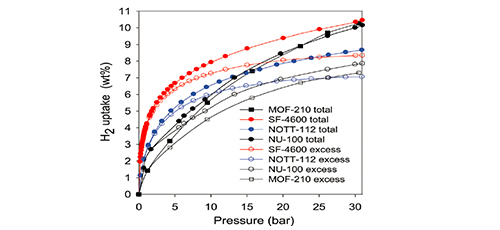
Hydrogen is one of the most promising clean energy because it has a much higher energy density than gasoline and emits no carbon dioxide after burning. For the application of hydrogen, hydrogen storage is considered as a key technology. Design and synthesis of porous material with high hydrogen storage capacity should be fully developed at first. However, none of the candidate materials developed so far has meet the DOE target yet. This review aimed to describe the presently major accomplishments and the challenges in the area of hydrogen storage.
Xu, D. & Duo Wu, W. (2018). The future of physical hydrogen storage . Advanced Materials Letters, 9(12), 851–854. https://doi.org/10.5185/amlett.2018.2151
MLA
Xu, D., & Duo Wu, W. "The future of physical hydrogen storage ", Advanced Materials Letters, 9, 12, 2018, 851–854. doi: 10.5185/amlett.2018.2151
HARVARD
Xu, D., & Duo Wu, W. (2018). 'The future of physical hydrogen storage ', Advanced Materials Letters, 9(12), pp. 851–854. doi: 10.5185/amlett.2018.2151
CHICAGO
Xu, D. & Duo Wu, W., "The future of physical hydrogen storage ." Advanced Materials Letters, 9 12 (2018): 851–854, doi: 10.5185/amlett.2018.2151
VANCOUVER
Xu D., Duo Wu W. The future of physical hydrogen storage . Adv. Mater. Lett. 2018;9(12):851–854. doi: 10.5185/amlett.2018.2151